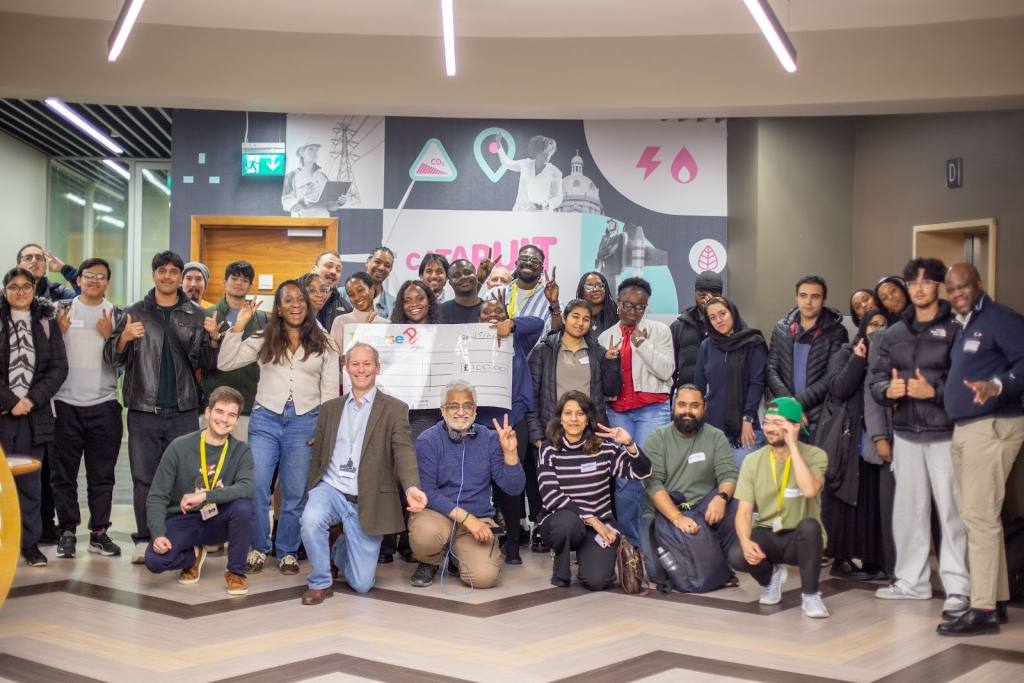
Comment by Kojo Apeagyei, AI Consultant on the Digital Team at Energy Systems Catapult
When we set out to design our first GridFlex hackathon with Diverse AI, we knew energy flexibility was a complex challenge. What we didn’t anticipate was how quickly our participants, many of them completely new to the energy sector, would grasp those complexities and build solutions that focused on inclusion, transparency and trust.
Why energy flexibility needs diverse builders
GridFlex is a partnership between Energy Systems Catapult and Digital Catapult. It exists to address critical challenges in deploying energy flexibility by developing innovative resources, supporting deep-tech innovators and building the collaboration structures needed to drive long-term systems change. Our ecosystem-building work, such as running events, developing tools and fostering collaboration, is designed to reduce uncertainty and build a thriving marketplace where UK innovators can solve flexibility challenges.
But there’s still a gap. The energy sector urgently needs AI skills, just as automation becomes essential to managing distributed renewable generation, heat pumps and electric vehicles. Meanwhile, many talented AI practitioners often find the energy sector impenetrable. It can be too complex, too niche and too opaque.
This hackathon is part of our efforts to bridge that gap.
The challenge: flexibility needs to work for everyone
Energy flexibility focuses on accommodating fluctuations in renewable energy generation by storing excess generation when it is not needed, and releasing the energy when demand peaks or renewable generation is low. It’s essential for achieving Net Zero. AI and machine learning are already transforming how we forecast demand, balance the grid and coordinate thousands of assets in real-time.
But deploying AI in the energy system must be done responsibly. Poorly designed automation can exclude vulnerable communities, erode trust or worse – it can cause system failures we can’t understand or control.
As Toju Duke, Diverse AI’s founder, put it: “Diversity drives diverse thoughts and drives diverse innovation. One of the problems with AI is you can just build homogeneous products that suit a certain set of people from a certain geographical location.”
We needed solutions that were technically sophisticated and human-centred. Solutions designed with renters, shift workers, multilingual communities and elderly users in mind – not just tech-savvy early adopters.
What we built together
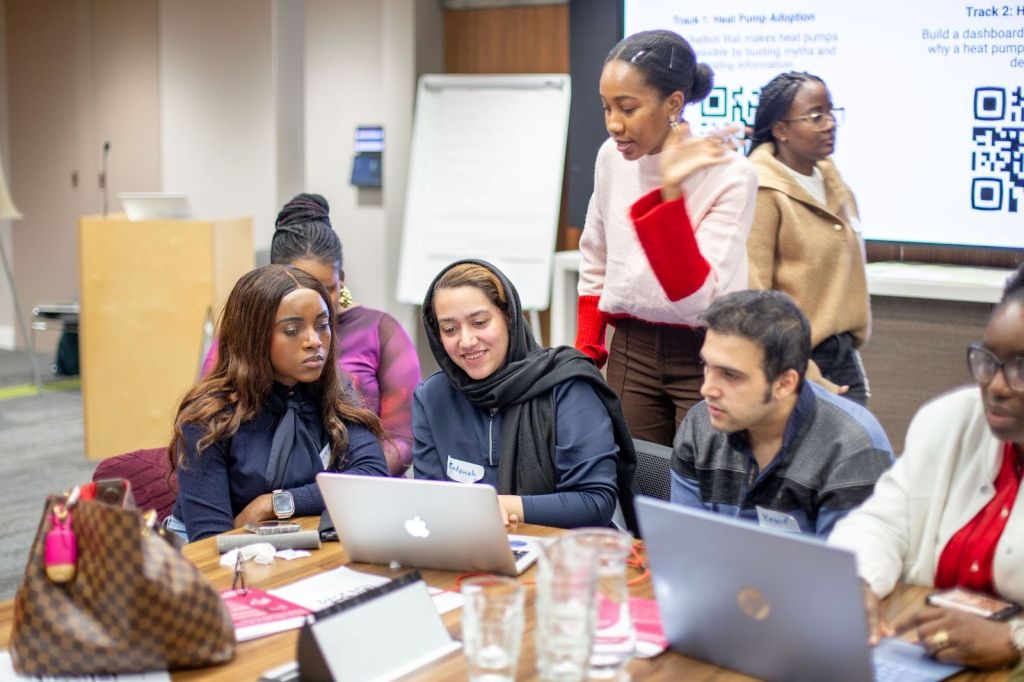
On a Saturday in November, more than 40 participants from across the UK gathered at our Birmingham office. Throughout the day, there were keynotes on responsible AI and energy flexibility, and a presentation from an SME, Marmot Energy, on how AI underpins their business.
We split participants into two challenge tracks focused on heat pumps, a technology critical to decarbonising heating, but one facing significant adoption and trust barriers.
- Track 1 tackled adoption: How do we make heat pumps understandable and accessible to everyone?
- Track 2 addressed trust: How do we explain automated energy decisions so people actually know whether the system is working for them?
We provided datasets from the Department for Energy Security and Net Zero’s Electrification of Heat project, which ESC managed. Along with personas representing people with real barriers, and myths-and-facts sheets. Then we got out of the way.
What happened next exceeded every expectation.
One team from track 1 built Globe Voice AI, a multilingual myth-busting voice assistant that the team called using their phones during their presentation. Different team members asked questions in different languages, switching these on the fly, and the AI responded fluently, breaking down heat pump myths and pointing to helpful resources. Fairness and inclusivity was baked into its core design.

A track 2 team created transparent explanation dashboards showing why a heat pump made specific decisions, such as pre-heating at 2am to use cheap electricity or temporarily reducing its output during grid stress. Clear language. Quantified benefits. Trust through transparency.
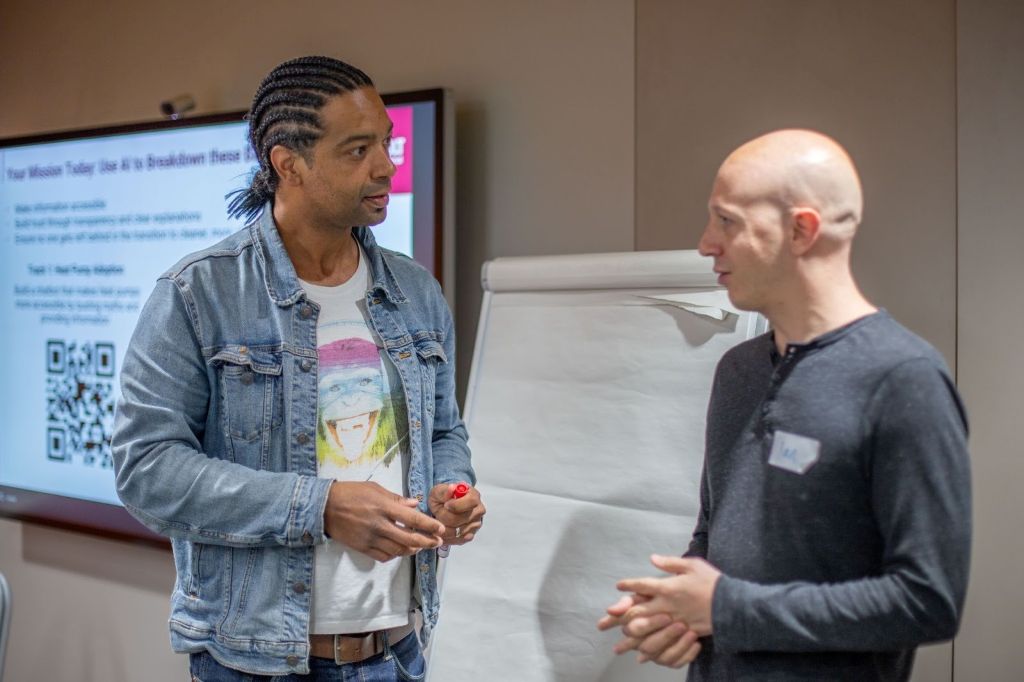
“We’re going to have to use better ways to think about how to solve problems than just humans alone” observed Ian Dunning, who facilitated teams throughout the day. “Utilising AI to delve into that messy, messy data is essential because I think it’s just too big a problem for algorithms or humans.”
What this means for energy flexibility
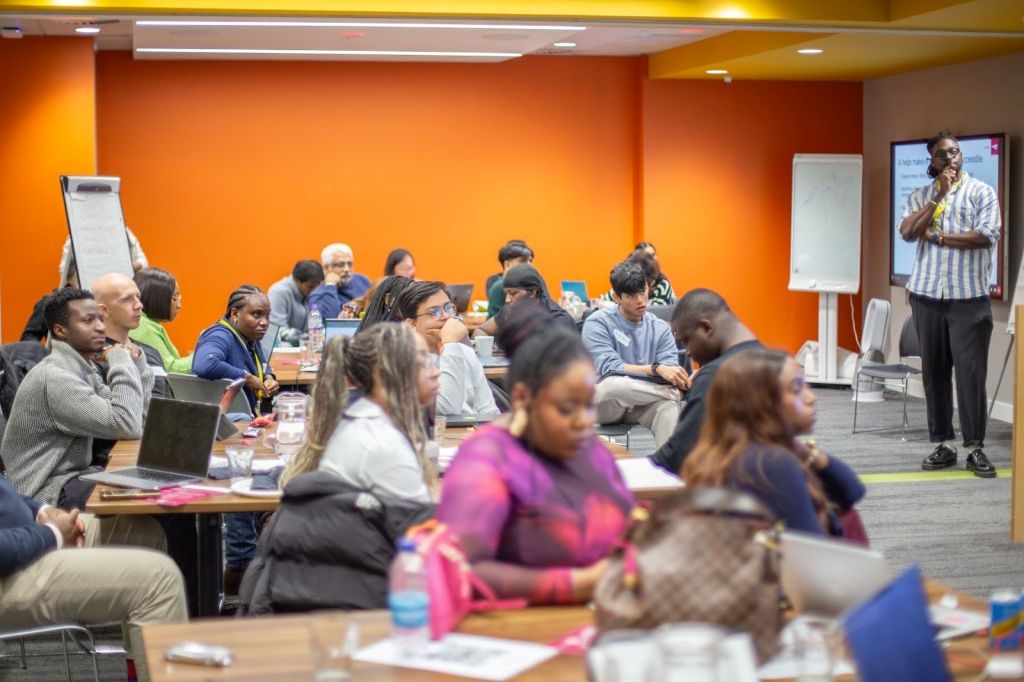
The solutions built that day were impressive technically, but more importantly, they also addressed real barriers to the adoption of flexibility: multilingual access, transparent automation, and human-centred design.
The more significant outcome is the enthusiasm it generated. Participants asked for more granular data, wanting to push beyond the challenge parameters.
Undergraduate students enquired about energy-sector internships, not just at the Catapults but across the industry. The hackathon introduced them to energy flexibility and made them realise they could build careers in this space.
Participant Clarissa Ibrahim reflected: “It’s really good for building confidence and skills as well as learning how to interact with people and learning different ideas and different ways to think about the same problem.”
Ian Alexander, Chief Product and Technology Officer of Marmot Energy added: “I think hackathons like this are good for getting a lot of people from different backgrounds together in one space to talk about a specific theme and come up with novel solutions that normally specialised people don’t necessarily get to.”
This is the talent pipeline the sector urgently needs: energy experts upskilling in AI, AI practitioners understanding energy’s complexity and opportunity, and crucially, diverse voices ensuring flexibility works for everyone, not just those who already have access to technology and capital.
Join us in building what’s next
This was GridFlex’s first hackathon. It certainly won’t be our last.
If you’re an innovator working on energy flexibility, a researcher exploring AI applications in energy systems, or simply curious about how we’re building a marketplace that ensures no one gets left behind in the transition to Net Zero – we want to hear from you.
Sign up for the GridFlex mailing list to be the first to know about upcoming activities, resources and opportunities to get involved.
As Toju Duke noted: “The truth is that if the Catapults hadn’t sponsored this event, it wouldn’t have happened.”
We’re proud to support work that brings new voices into energy innovation. Because the future of flexibility needs diverse builders and we’re committed to making space for them.
Learn more about GridFlex and our work accelerating innovation in digitalised energy flexibility.