“Mind the gap” was first announced on the London Underground in 1969. But only recently has the phrase become applicable to the energy world.
Two decades ago, there was no gap for energy planners to worry about. The national grid control room managed around 100 power stations, switching them on and off to match electricity supply with demand. The main challenge was making sure there was enough power to meet peak demand between 16:00-18:00 on cold winter evenings.
Peak demand was predictable. If enough power stations were available, the system worked. No surprises. No gaps.
Times have changed. One of the key messages from Innovating to Net Zero is clear: we need an energy system that can handle growing and shifting gaps between supply and demand.
Balancing supply and demand
New types of generation, storage, and consumption are being added to the energy system to improve energy security, cut emissions, and reduce costs. In the past, most electricity came from power stations that could be turned up or down when needed. Now, much of it comes from renewables that depend on the weather rather than the control room. We also have more battery storage, which can respond almost instantly.
At the same time, the shift to electric heating and transport is creating major new sources of demand. All these devices are connected, forming a system of systems. If generation, storage, and energy use can work together in a smart way, there is potential to bring down the total cost of energy.
Balancing the system
Peak gap differs from peak demand in several important ways:
- The peak gap can be an over-supply or a shortfall.
- It can happen at any time.
- Imbalances can accumulate over long periods.
- There’s more than one type of peak gap.
- Gaps can occur spatially as well as temporally.
Gaps tell us about how much flexibility or storage we need to balance the system. These assets divide into two types; those which can provide within-day balancing and those that work between days, over much longer timeframes of weeks, months, or years.
The objective of within-day balancing is to flatten any differences between supply and demand over the course of the day and minimise the need for between-day balancing assets. If we can spread the gap over 24-hours rather than two, we can reduce the number of assets needed to cope with it by a factor of 12. The key feature about within-day balancing is that at the end of a 24-hour period all the within-day assets need to be returned to their state at the start of the period. Batteries need to be recharged, and hot water tanks need to be reheated.
Over the course of a day there will be a surplus of generation or a shortage, and this surplus or shortfall needs to be managed by between-day balancing – either by generating more power or storing any excess. Predicting the expected shortage or surplus is broadly achievable using weather forecasts and an understanding of types of demand on any day. Therefore, enough between-day balancing plant needs to be run to bring total supply and demand into balance over the 24-hour period.
Meet the gaps
Building upon our thinking for Innovating to Net Zero 2024 and other Catapult projects, we’ve identified four peak gaps. The impact of between-day balancing is illustrated in Figures 1. In Figure 1a, total demand exceeds the total supply from generation and interconnectors.
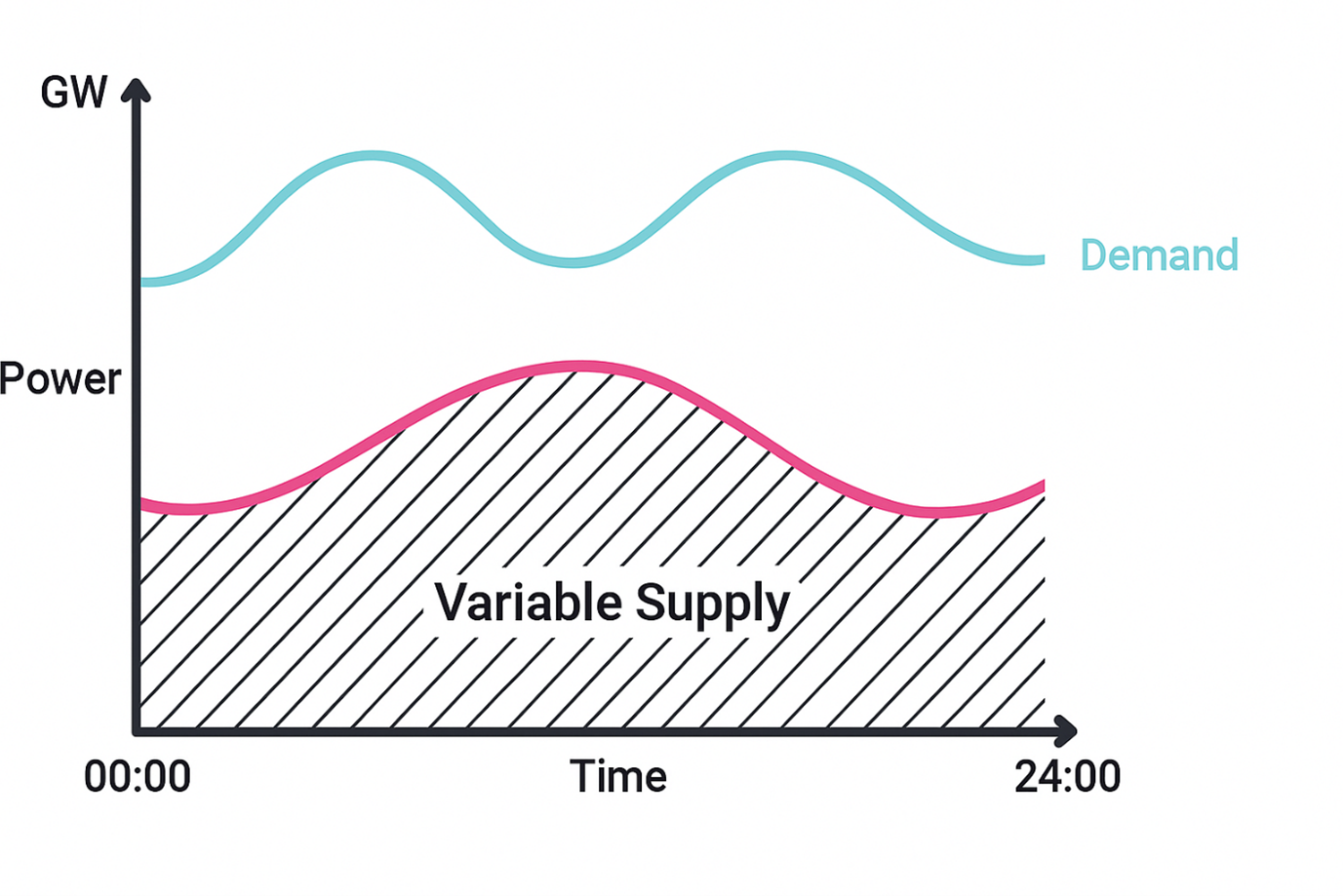
Figure 1a: Mismatch between average daily demand and average daily supply
This shortfall is met in Figure 1b by turning on enough between-day balancing assets to bring average supply and demand into balance over the 24-hour period. This defines our first gap, the peak daily gap which is the maximum difference over the year between average daily demand and average daily supply of power. It represents the total need for between-day balancing capacity in GW.
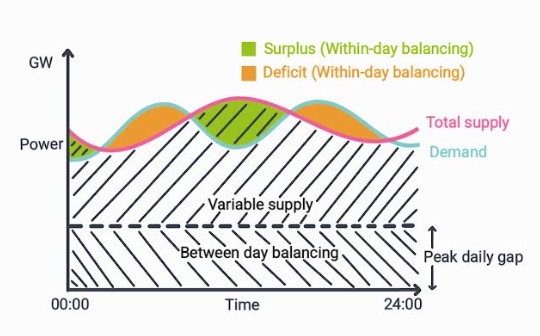
Figure 1b: Illustration of between-day balancing bringing average daily supply and demand into balance
To always bring actual supply and demand into balance within-day we must consider two further peak gaps. The first being the instantaneous peak power gap (Figure 2); the time during the year when there is the maximum difference between supply (including between-day balancing) and demand. This is likely to occur when a spike in energy demand coincides with drop in renewables and interconnector output. This peak power gap defines the maximum GW of within-day balancing that we need.
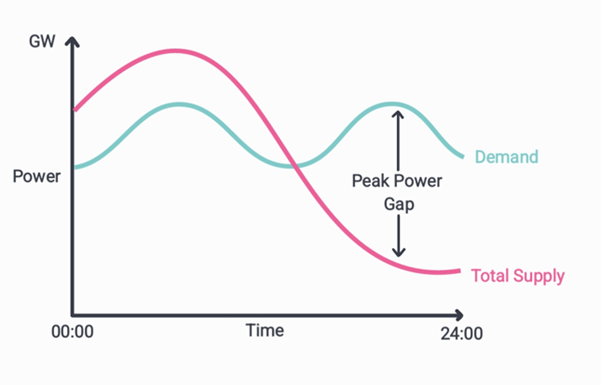
Figure 2: Illustrative example of peak power gap
We also need to identify the peak energy gap (Figure 3). This will not necessarily occur at the same time as the peak power gap and is likely to happen when a storm moves across the British Isles and the wind gradually falls or increases over the course of the day. Within-day balancing assets will need to absorb a large amount of surplus generation during one half of the day and shift it to the second half. The peak energy gap relates to an area of the graph and is measured in GWh or potentially TWh.

Figure 3: Illustrative example of peak energy gap
The final gap is the hardest to predict, the total amount of between-day balancing we might need, over time. Within-day balancing assets are returned to their original state at the end of each day. But for between-day assets, one day with a shortage of generation can be followed by another and another, gradually depleting whatever energy store is being used. This is the fourth gap, the peak durational gap (Figure 4).
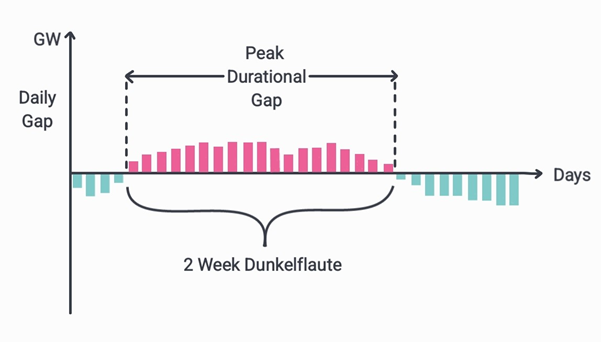
Figure 4: Illustrative example of peak durational gap
The peak durational gap has traditionally been based on dunkelflaute – cold, still, cloudy periods lasting weeks with low renewable output. However, other weather effects such as long periods of below average wind can result in even larger gaps. The Royal Society’s 2023 report found that multi-decade weather analysis reveals higher risks still. Ultimately, setting the strategic reserve is a political decision – balancing storage costs against the risk of energy shortages.
A better understanding of the scale of peak gaps and the impact of different technology choices in meeting them will help inform decision-makers, network operators and owners about the choices they have to make and actions they must take to deliver the innovation needed to support the transition to a resilient low-carbon energy system.
Our flagship Innovating to Net Zero 2026 report and event in February highlighted the innovation priorities needed to support a flexible energy system. You can now download the report at the link below.
Download Innovating to Net Zero 2026
In February 2026, Energy Systems Catapult published research showing that scaling flexibility technologies is a huge opportunity for UK innovators and could help save billions in energy costs. Read our report, Innovating to Net Zero 2026: Scaling flexibility to meet the five peaks challenge, to discover how energy supply and demand will shape the overall scale and architecture of the UK’s cleaner energy system, and the innovations in flexibility technologies and services needed to unlock opportunities for UK businesses and consumers.
Download the report
To download this file, we would be grateful if you could tell us a little about yourself.
We use this information for internal research purposes to help us better understand which energy sector stakeholders are interested in which areas of our work. We do not share your details with any third parties.
If you do not wish to complete the form, please email communications@es.catapult.org.uk to request a digital copy.
Want to know more?
Find out more about how Energy Systems Catapult can help you and your teams
Get in touch
Want to know more?
Find out more about how Energy Systems Catapult can help you