Want to know more?
Find out more about how Energy Systems Catapult can help you and your teams
Get in touch
Want to know more?
Find out more about how Energy Systems Catapult can help you
Last week the government gave the go-ahead for Rolls-Royce to deliver the UK’s first three small modular nuclear reactors (SMRs) in a move billed to boost energy security, economic growth and the transition to clean power – but the country could gain far more if the rollout is carefully choreographed.
Our latest modelling for National Grid Electricity Transmission reveals that location is everything. Built in the right places, SMRs can:
Get the siting wrong, however, and SMRs could undermine decarbonisation goals, increase network stress, strand costly grid investment in the wrong places, and limit the benefits of nuclear cogeneration.
These risks were flagged at a recent Energy Security and Net Zero Committee meeting. Concentrating more than three SMRs at Wylfa – the UK’s first SMR site – would demand additional grid investment. But that investment could work harder elsewhere.
The upshot? Unless SMRs are planned as part of a whole system strategy, the UK risks locking in exactly the inefficiencies it could have helped to avoid.
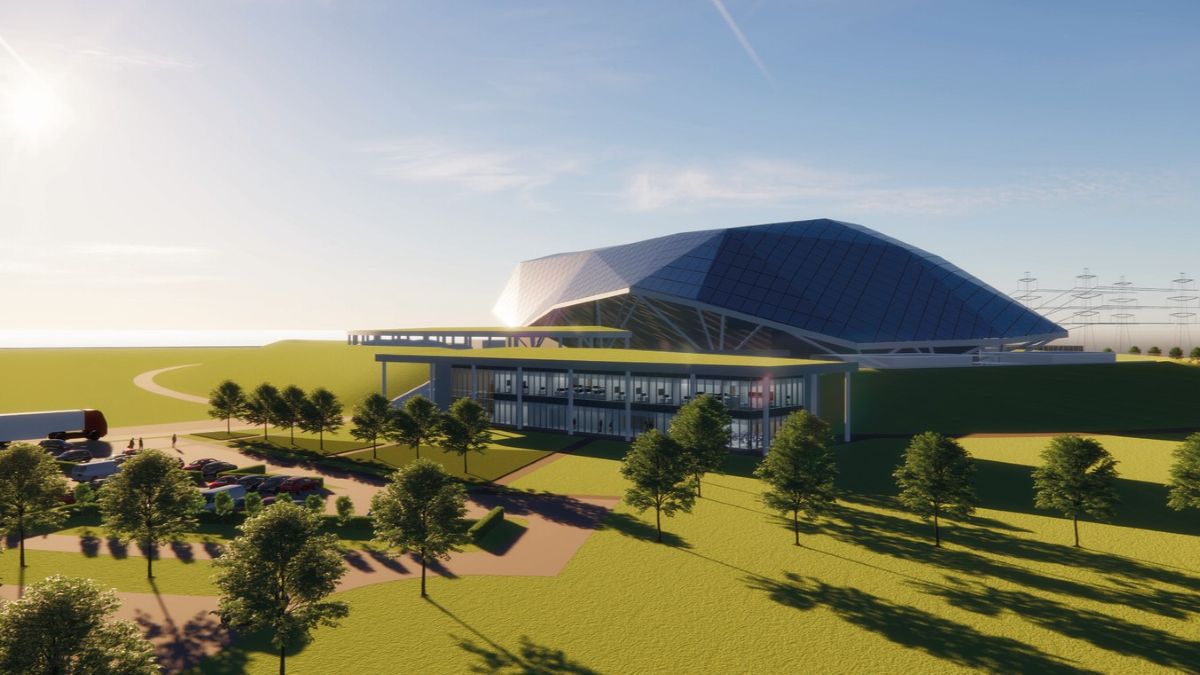
An artist’s impression of Rolls-Royce’s small modular reactor (Image credit: Rolls-Royce)
As the UK decarbonises, it will move away from fossil fuels to three main forms of zero carbon energy: electricity, hydrogen and district heat (District heat is captured from a central source such as a power station and distributed to homes and commercial buildings through a network of insulated underground pipes).
These energy vectors will power and heat homes, industry and the way people get around.
The next generation of nuclear reactors, whether it’s large traditional reactors like the European Pressurised Reactor (EPR), small modular reactors (SMR) or advanced modular reactors (AMR), have the ability to produce electricity and heat. This is called cogeneration.
This cogenerated heat can reach temperatures as high as 900°C – high enough to produce hydrogen through electrolysis and advanced thermochemical processes such as the iodine-sulphur cycle currently under development at the Japan Atomic Energy Agency.
Alternatively, it can be used directly by industry to make a range of products from steel and cement to chemicals, plastics and food. A recent study by Energy Systems Nexus produced an interactive map highlighting the UK’s energy assets and the potential for cogeneration to support industrial decarbonisation.
Heat from SMRs and AMRs can also be used in direct air capture plants, which remove CO2 from the atmosphere helping to reduce greenhouse gas emissions.
Meanwhile, cogeneration can also be used to produce lower temperature heat for district heat networks supplying homes and businesses.
With the UK targeting 24 GW of nuclear by 2050, the Government has backed SMRs and AMRs through a £2.5bn commitment to the Rolls-Royce SMR programme and plans for an AMR demonstrator by the early 2030s.
That investment raises two simple but important questions: which type of reactor should we build, and where might they do the most good?
SMRs offer a compelling opportunity for the UK’s energy future: their reduced footprint and cooling requirements free them from the coastal constraints that have historically defined nuclear siting, opening up far more varied and strategically beneficial locations.
Unlike the gigawatt-scale plants at Hinkley and Sizewell, SMRs and their advanced modular cousins give planners genuine flexibility – but only if the full suite of benefits these technologies can provide is considered when designing the future energy system, rather than simply replicating old approaches at a smaller scale.
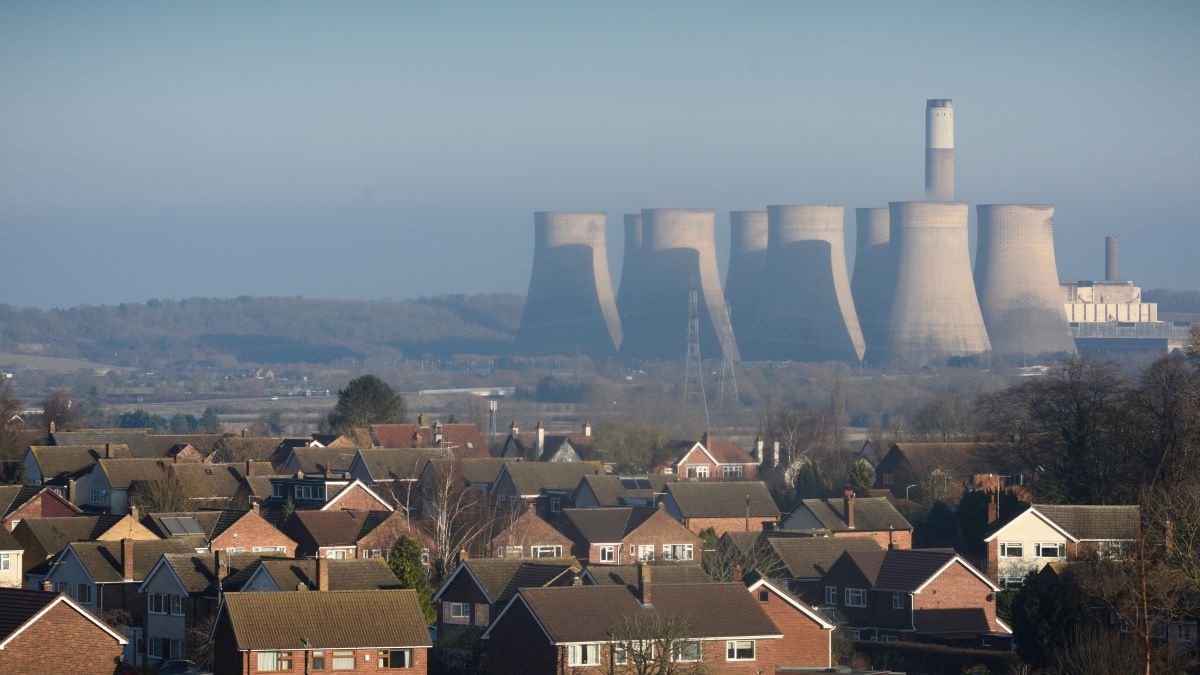
Ratcliffe-on-Soar, the UK’s last coal-fired power station, shutdown in 2024. The loss of large thermal power stations makes it harder to manage voltage and fault levels
The closure of coal-fired plants across the UK benefits the environment but risks weakening the energy system.
These types of plant, with their large rotating turbines provide inertia – an important feature of a well-functioning power sector. Inertia slows down how quickly system frequency changes after a disturbance, maintaining grid stability.
The loss of large thermal power stations, particularly in inland areas, has reduced local synchronous generation. This makes it harder to manage voltage and fault levels, especially during periods of high demand or system stress.
SMRs and AMRs, with their relatively modest cooling requirements, could replace retired coal plants in non-coastal regions helping to restore some of that local system strength.
Furthermore, adding firm generation like nuclear closer to demand can reduce the amount of power that needs to flow across heavily constrained transmission boundaries.
The B6 boundary between Scotland and England is a common bottleneck for north-south power transfers. Installing SMRs does not remove the need for network investment but it can change where and when reinforcement is required, making it easier to plan the system as a whole. This is why siting decisions matter.
Placing modular reactors in areas where the system is becoming weaker would improve day-to-day operation and reduce the need for other technical fixes later on.
In short, the smaller size of SMRs and AMRs turns siting into a design choice. It allows nuclear to be part of the solution to regional system challenges, not just a source of national energy supply.
Co-generation offers both decarbonisation and system flexibility.
In normal operation, it delivers low-carbon heat and electricity. During periods of extended low renewable output, the balance can shift – heat production is temporarily reduced, freeing more of the reactor’s output for the grid.
Across multiple sites, this flexibility can make a meaningful difference to the system as a whole, reducing investment in energy storage and standby gas-fired power plants that today’s system relies on to balance sudden shortfalls between supply and demand. These benefits are also discussed in our latest Innovating to Net Zero report.
Whilst SMRs and AMRs can be sited in a wider range of locations, it does not mean we can build them anywhere. Yes, cooling requirements are lower compared to large nuclear plants, but water availability still matters.
Inland sites must contend with limits on how much water can be drawn from local rivers and groundwater, as well as drought risk and growing competition from other users — housing developments and data centres among them.
That is why nuclear siting needs to be looked at through a water–energy lens from the outset. The best outcomes will come from balancing network needs, water constraints and local conditions together, not from solving them one by one.
The UK now has the tools to do this properly. Strategic Spatial Energy Planning (SSEP), Regional Energy Strategic Planning (RESP) and the Centralised Strategic Network Plan (CSNP) give us a way to think ahead.
These processes allow us to ask better questions, such as:
Seen this way, SMR and AMR siting becomes a strategic opportunity, not just a planning challenge.
There is clear value in NESO, NGET, nuclear developers and manufacturers working together to understand the local and regional benefits of more distributed nuclear deployment, including operability, resilience and network impacts, alongside generation.
If we take this approach, we move beyond asking “where nuclear is allowed” and towards a more meaningful question: where can modular nuclear best support a secure, resilient and affordable future energy system?
This blog draws on analysis we carried out as part of the Nuclear Cogeneration project led by Energy Systems Catapult with National Grid Electricity Transmission.
Find out more about how Energy Systems Catapult can help you and your teams
Find out more about how Energy Systems Catapult can help you