AirEx CEO Agnes Czako tells Energy Systems Catapult how smart bricks are transforming home heating for tens of thousands of households across the UK — and why Net Zero means nothing if the most vulnerable are left behind
How is AirEx helping to accelerate the clean energy transition?
At AirEx we design and manufacture smart ventilation controls for homes. Our flagship product is a ‘smart air brick’ that reduces heat loss.
Traditional air bricks are found in homes built before 1945. They were installed to improve ventilation but research shows that they can lose up to 15% of a home’s heat. When residents block these air vents to save heat, it causes damp and mould, which can make people ill.
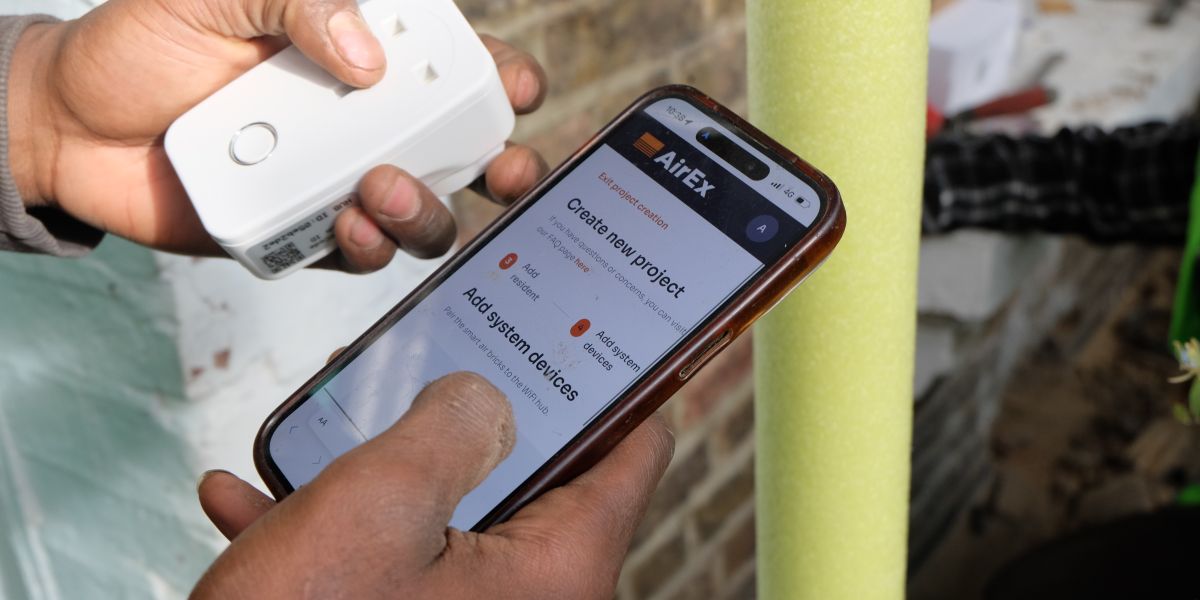
AirEx solves this problem by replacing traditional air bricks with our smart bricks. Our product has sensors that monitor temperature and humidity in real time and automatically adjust airflow to maintain healthy ventilation and minimise heat loss.
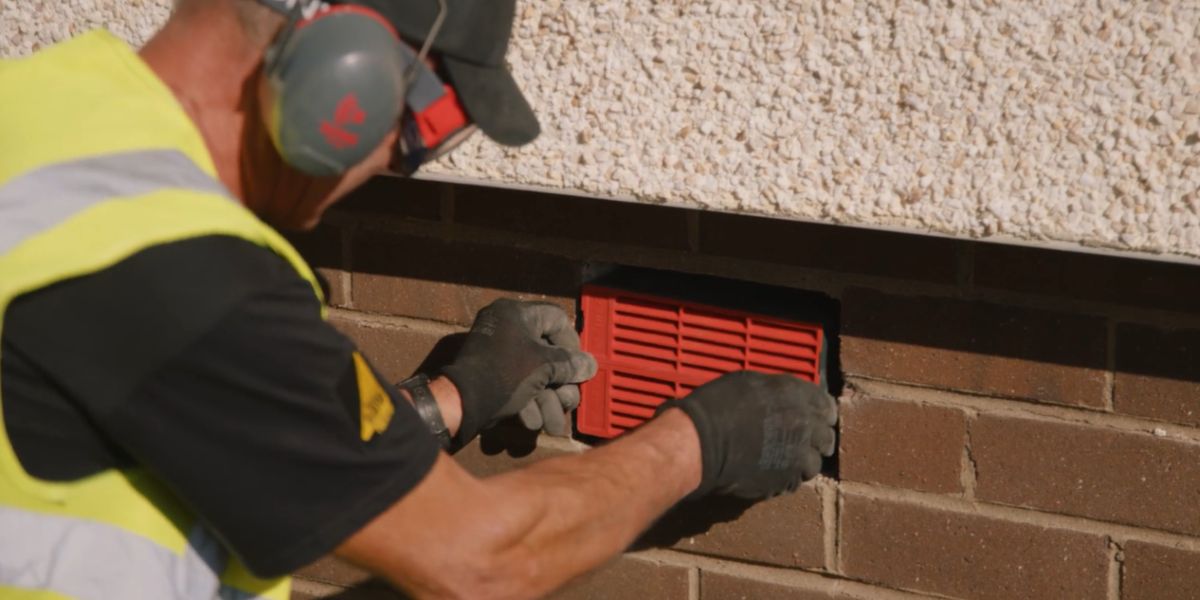
We work primarily with social housing providers and retrofit contractors who are responsible for improving the UK’s least energy-efficient homes.
Decarbonising heat is critical. But if we don’t address the building fabric first – to improve insulation, airtightness, and controlled ventilation – we’re simply electrifying inefficiency.
Now that our technology is officially recognised under the UK’s Energy Performance Certificate (EPC) framework, AirEx’s smart air bricks can be fully subsidised for fuel-poor residents across the UK.
Since our commercial launch five years ago, over 40,000 AirEx units have been installed across the UK – from Portsmouth to the Shetlands Islands. These units will reduce CO2 emissions by 56 million kilograms during their lifetime – and we’re just getting started.
How have you become a cleantech leader?
My journey into this space wasn’t accidental. I grew up in post-communist Hungary in the early ‘90s where wasting anything simply wasn’t an option. Energy, food, water – everything was used consciously, because resources were scarce. That early exposure to scarcity shaped my relationship with sustainability long before I had the language for it.
When I moved to the UK 14 years ago, I found myself working in energy consulting, leading the delivery of 30,000 fuel poverty assessments in some of London’s poorest communities. I personally visited thousands of homes, seeing families having to choose between buying food or paying their heating bills.
I was absolutely shocked to see such deep inequality in one of the wealthiest countries in the world. AirEx was born from that tension: Net Zero means very little if the most vulnerable households are left behind.
What barriers have you overcome in the race to scale up your business?
The journey from idea to commercial scale hasn’t been smooth. There were moments I genuinely thought we might not make it.
Trying to raise funding during the first national lockdown was probably the most intense period. Investors were cautious, supply chains were disrupted, we were facing a global microchip shortage, and we were launching our product at the same time. What helped us navigate that period was persistence and discipline.
We kept fundraising conversations alive, we controlled costs rigorously, and we stayed focused on our mission. We emerged more resilient and far more commercially sharp. Fast forward to today, and we’ve grown into a multi-million-turnover business with the foundations in place for truly exponential growth.
Regulation has been another persistent challenge. Our product may sound simple, but the built environment is one of the most heavily regulated sectors in the world. After tragedies like Grenfell, safety and consumer protection quite rightly come first, yet innovation doesn’t always fit neatly into existing frameworks.
As a startup, we’ve had to navigate complex standards, dozens of approval bodies and layers of government bureaucracy, often without a clear decision-maker. Over time we learned to speak the language of regulators and partnered with those forward-thinking ‘allies’ who recognise that we need innovation to achieve Net Zero.
As a female founder, there have been additional realities to navigate, particularly in fundraising. I’ve repeatedly seen male founders asked about scale and exit valuations: “How big can the business grow?”
While women in the same room are asked about risk and downside. It’s rarely overt; it’s unconscious bias, but the impact is real. Seven years on from the Alison Rose review of female entrepreneurship, only around 2% of UK venture capital funding goes to female-founded businesses, and the dial has barely moved.
I certainly didn’t fit the traditional venture-backed mould either: a non-technical, young, immigrant woman building a hardware company in a heavily regulated sector. Raising our first million was by far the hardest part but once momentum builds, credibility compounds.
Ultimately, though, I’d love us to reach a point where we no longer need the term “female founder” at all, where founders are judged purely on the merit of their ideas and execution, not on gender.
What has sustained me most is community. Building a network of climate tech founders, particularly other women, has been invaluable. We compare notes on funding, share supplier contacts and talk openly about setbacks. Leadership can be lonely and peer support clearly changes that.
I found it particularly helpful working with Energy Systems Catapult and the climate tech community around it. It’s been brilliant having a network of so many like-minded individuals serious about climate change.
What advice do you have for the next generation of clean energy leaders?
If I were speaking directly to women considering entering or scaling in climate tech, my first piece of advice is anchor yourself in the problem, not just the technology. Sustainability is complex – hardware is even more complex and it’s also incredibly capital intensive. You need deep conviction in the issue you’re solving, because there will be moments when that conviction is the only thing carrying you forward.
Secondly, build commercial literacy early. Building the tech is essential, but customer feedback matters just as much. Think about your route to market from day one. In our case, having come directly from the housing sector meant we deeply understood what our customers prioritise, how they buy and the constraints they operate under.
Lastly, surround yourself with people who are better than you in specific areas. I’m incredibly proud of the team we’ve built at AirEx. We have smart, capable and mission-driven individuals with an entrepreneurial mindset who are comfortable with ambiguity. This has been one of our greatest strengths.
All the hard moments feel worthwhile because we’re in it together.
Book a free SME growth consultation
This free-to-attend consultation is for organisations with products or services they believe could be sold into the energy sector.
Find out more