Want to know more?
Find out more about how Energy Systems Catapult can help you and your teams
Get in touch
Want to know more?
Find out more about how Energy Systems Catapult can help you
The scheme, funded through Innovation Launchpad Network+, brought together our research from the University of Sheffield with the Catapult’s whole energy system expertise.
We explored how carbon capture could be rolled out across the UK’s Energy-from-Waste (EfW) plants. Focusing on not just the technology itself, but also the costs, available space, plant location, energy use, and how the captured CO2 would reach permanent storage.
The main question was: how can this existing waste infrastructure support emissions reduction and greenhouse gas removal (GGR)?
I think it’s only half the story. We must keep reducing, reusing and recycling, but some residual waste will remain. EfW plants already keep that material out of landfill.
With CCS, those plants can also capture and permanently store carbon contained in waste. Around 54% of the carbon is biogenic, meaning it’s contained within food or recently dead material like wood and crop waste. If we can prevent it from decomposing and releasing that carbon back into nature, we can actively reduce CO2 from the atmosphere.
Waste is still something to minimise by promoting recycling, but what remains can become a GGR resource.
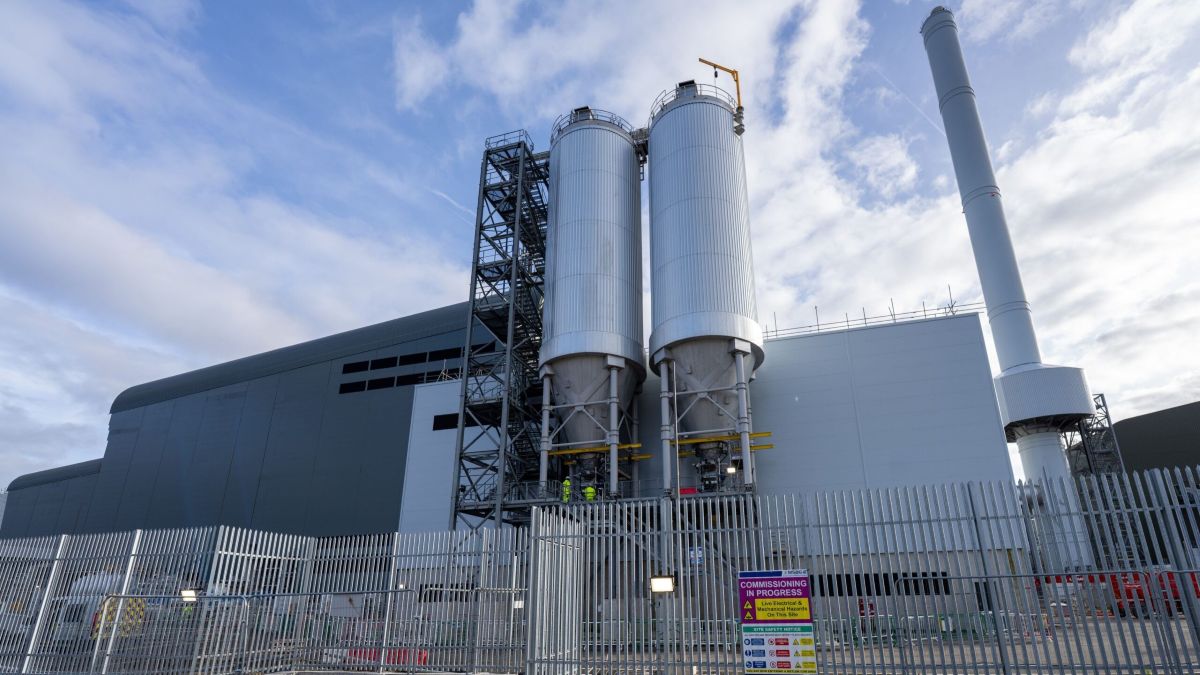
Encyclis’ Protos plant in Cheshire is set to become the first fully decarbonised energy-from-waste facility in the UK – with plans to add a carbon capture plant that will connect to the HyNet cluster and store its emissions in the seabed beneath Liverpool Bay (credit: Encyclis)
Both can help, but WECCS appears to deliver the greater overall climate benefit when all greenhouse gas impacts are accounted for.
We found WECCS saves around 1.2 tonnes of carbon dioxide per tonne of waste. It’s 0.7 tonnes for waste-to-SAF.
SAF is used to replace fossil aviation fuel, but its carbon is released when the fuel is burned. The WECCS approach processes waste and permanently stores the carbon, including the biogenic share.
That difference is important when deciding how limited waste feedstocks should be used.
The UK can develop both industries, but we can’t use the same waste twice. A single tonne of residual waste sent to an EfW plant with CCS is no longer available to make aviation fuel, and vice versa.
The real question is to what extent each type of waste management delivers the greatest climate value considering the whole lifecycle of each approach. That would require joined-up decisions across waste, aviation, energy and carbon-removal policy, rather than each sector planning for decarbonisation using the same limited feedstock.
EfW plants operate steadily because waste must be treated throughout the year. That gives the capture plant and the wider CO2 transport and storage network a predictable flow of CO2. EfW plants are also a useful scale for early projects and suitable for potential retrofits when CCS technology is proven.
Most importantly, compared to other industries, emissions from EfW plants contain both fossil and biogenic carbon. Capturing the fossil share avoids emissions, while permanently storing the biogenic share tackles the greenhouse gas removal. That combination is unusual and valuable.
No, the waste hierarchy needs to evolve, not be replaced. Reducing, reusing and recycling must remain the priorities, and CCS should never justify producing more waste.
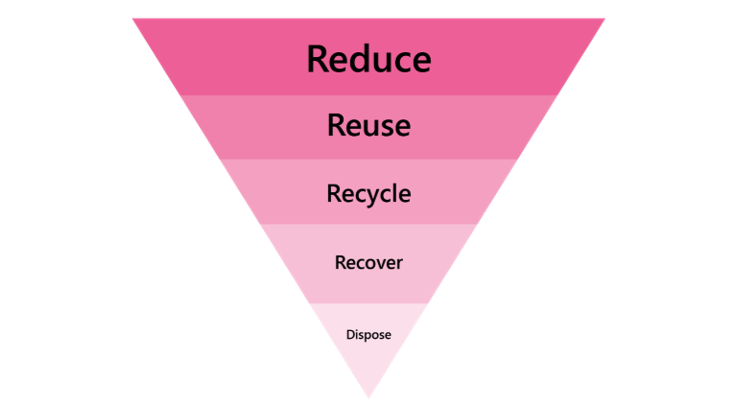
The traditional waste hierarchy ranks waste management options from most to least environmentally friendly
But the traditional hierarchy doesn’t recognise the potential climate value of residual waste. Once CCS is added, EfW can avoid landfill, recover energy, cut fossil emissions and remove biogenic CO2. Therefore, a broader approach is needed that considers waste management and carbon management together.
Renewables and CCS solve different problems. Renewables can decarbonise electricity generation, but they cannot eliminate emissions from treating residual waste.
CCS costs vary significantly: our report shows average system costs rising from around £201 per tonne of CO2 for large plants near clusters to around £335 for small, remote plants. That is why deployment should be staged, starting with the plants that can deliver the greatest benefit at the lowest cost.
Operators should be preparing detailed design specifications and site plans now. They need to understand how carbon capture will affect electricity and heat production, and how the CO2 will be transported. Also, whether they have enough space to accommodate the capture plant.
Only a limited number of plants are close to industrial clusters, so pipelines will not be the answer everywhere. Shipping and rail will also be important.
These projects take years to design, permit and finance, so waiting until 2028 would be too late.
It could create a repeatable UK market for capture equipment, heat integration, CO2 conditioning, transport and storage. It could also build experience in monitoring and engineering services.
EfW plants are smaller than many industrial emitters, so they offer opportunities to standardise designs and learn through multiple projects.
The UK could also build valuable expertise in moving CO2 by ship and rail. Those skills would be relevant nationally and internationally because many countries face the same challenge of managing residual waste while cutting emissions.
The main message is that EfW with CCS should be treated as strategic national infrastructure, not simply as an optional waste-sector add-on.
A full staged rollout by 2050 could capture nearly 20 million tonnes of CO2 a year, while the first two stages of deploying CCS into the sector could provide around six million tonnes of biogenic removals by 2035.
This is about 27% of the UK target for GGR. To grasp that opportunity, we need coordinated policy for waste, CCS infrastructure and GGR.
The residency involved Professor Mathieu Lucquiaud and Dr Karim Rabea working with Catapult experts on modelling, data translation and analysis – making use of the Catapult’s flagship techno-economic optimisation tool, the Energy System Modelling Environment (ESME), and high-performance computing (HPC) simulation environments.
Interested in applying for the latest Researcher in Residence scheme and working with the Catapult network to advance your work from lab towards real-world impact? Applications are now open for projects covering £25,000–£50,000 of university researcher costs.
See the full details and begin your application here.
Find out more about how Energy Systems Catapult can help you and your teams
Find out more about how Energy Systems Catapult can help you