Want to know more?
Find out more about how Energy Systems Catapult can help you and your teams
Get in touch
Want to know more?
Find out more about how Energy Systems Catapult can help you
As the UK energy system enters a new phase of transformation, the introduction of Regional Energy Strategic Plans (RESP) marks a major shift in how we coordinate local and regional decision‑making. RESP promises a more integrated, whole system view but it also raises an important question: how do we ensure local evidence, local priorities and local voices remain central as decisions scale up to the regional level?
We’ve interviewed dozens of local authorities, Distribution Network Operators (DNOs), national bodies, and delivery organisations to understand the real‑world value of Local Area Energy Planning (LAEP).
They told us that LAEPs give local areas a stronger, locally owned evidence base, helping them inform decisions, engage partners and ensure local priorities carry through into RESPs.
Lynne McDonald, Head of Local Net Zero at UK Power Networks, said LAEPs feed local community priorities into network planning: “We’ve seen first-hand the value of proactive collaboration with local authorities and partners. Through our LAEP Support Framework, we’ve supported 15 Local Area Energy Plans (LAEPs) covering 66 local authority areas, helping to embed local insights into our forecasts, strategic planning and future network investment decisions.
“Our partnership with UK100 [a network of ambitious councils led by all political parties working together to tackle climate change], together with local authorities and practitioners has been instrumental in understanding local plans today and tomorrow. Energy Systems Catapult played a key role in delivering the first LAEP in our regions with Peterborough, showing how local evidence can shape better planning outcomes.
“These strong partnerships continue to help us ensure that network investment is aligned with the communities, projects and economic growth opportunities that will drive the transition to Net Zero.”

One of the most striking insights from the interviews is how deeply LAEPs are embedded in energy network planning.
Elizabeth Hanger, DSO Strategic Engagement Officer at National Grid Electricity Distribution (NGED), told us how LAEP is shaping their Distribution Future Energy Scenarios (DFES): “We were able to compare LAEP data directly to our DFES forecasts. This is the first step of integrating the LAEP data into our system planning process.
“Our methodology includes plotting the local authority LAEP targets against our DFES range…Once we’ve done this, it means this is the data we’re using in our network studies and we’re identifying constraints, and building [or] planning solutions to meet that ambition of the local authority.”
Representatives from Northern Powergrid and SSEN echoed this point, adding that LAEPs make planning less fragmented and identify where resources need to be allocated.
This is critical. It means that bottom‑up evidence is already informing the modelling that will feed into RESP, ensuring regional plans don’t simply scale down national assumptions, but rather scale up real local intent and constraint.
LAEPs are also actively driving investment into electricity networks.
In January 2025, when Electricity North West requested more than £200 million of additional regulated investment allowance to expand its network, it referenced LAEPs in its supporting evidence.
Local authorities consistently told us that LAEP provides the evidence and clarity they need to strengthen bids and unlock investment.
East Midlands Combined Authority credited LAEP’s early work with helping build a business case to secure £10 million in retrofit funding. While the Welsh Government described how the consistent evidence base from LAEP puts them in a strong position to attract funding for energy projects.
Gail Scholes, Chief Sustainability Officer at Bournemouth, Christchurch and Poole Council shared: “What the LAEP has delivered is a valuable framework for engaging a much broader group of stakeholders around the region’s Net Zero ambitions.
“Alongside the DNO, NHS and transport partners, the process brought together local authorities, housing providers, businesses, energy developers, community organisations and public sector partners to develop a shared understanding of future energy needs and decarbonisation opportunities.
“LAEP priority actions helped us identify additional low-carbon heat sources, assess opportunities for heat networks, building retrofit, energy infrastructure upgrades and transport electrification, and align investment planning across sectors. This has given us the opportunity to update and refresh our original feasibility studies with a stronger evidence base and wider stakeholder buy-in.
“Building on the momentum created through the LAEP, we’ve now engaged with industry experts to further develop and refresh our heat network feasibility work and help progress delivery of priority projects.”
One of our interviewees said a LAEP strengthened the evidence for the Cardiff Heat Network – a £15.5 million investment.
This reinforces a theme across our research: the evidence from LAEPs strengthens business cases, validates existing projects, and makes funding and investment decisions easier to justify.
Our interviewees were also clear about challenges they face on LAEPs. Local areas needing to move quickly from planning into delivery but have limited capacity to achieve this. There was also criticism that static LAEP formats are no longer fit for purpose.
Across all interviews, stakeholders told us:
We’ve already been working towards more dynamic, digital LAEPs, but “digital” alone is not enough. The value comes from approaches that retain what makes LAEP distinctive: robust whole-system modelling, locally grounded evidence, transparent project prioritisation, stakeholder engagement and practical support to move from planning into delivery.
Insights from our first-of-a-kind digital LAEP for the GreenerFuture Leicestershire project show how this can work in practice – helping local areas rapidly identify a portfolio of projects, prioritise opportunities using established logic, and build stronger cases for funding and investment.
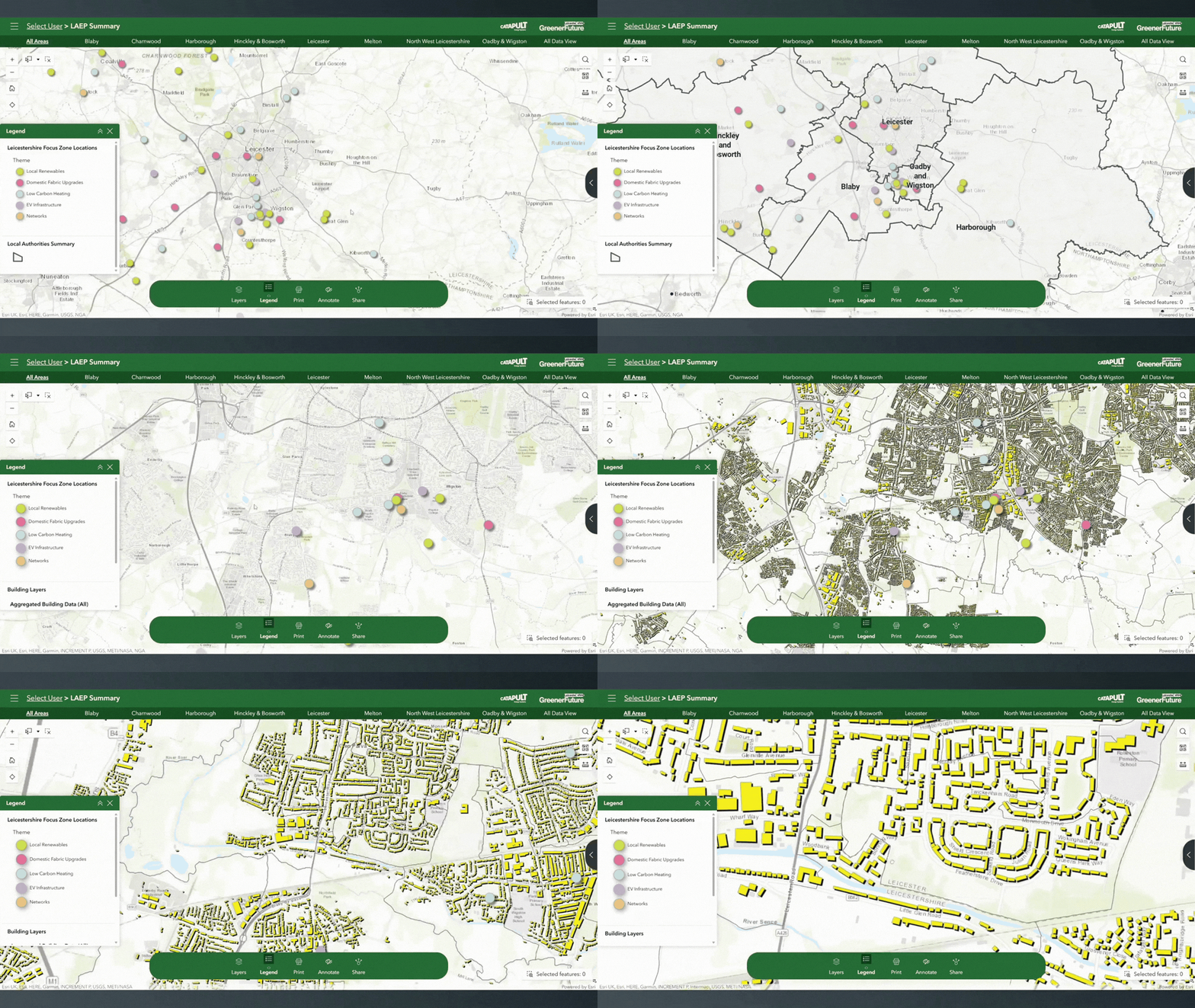
The LAEP Lens tool allows users to explore clean energy project opportunities across Leicestershire
They can also make outputs easier for stakeholders to understand and use, improving buy-in and supporting better access to shared data while reducing reliance on consultancies.
As LAEP becomes more dynamic and digital, its value increasingly lies in feeding robust, place-based intelligence into wider strategic decision-making. While RESP will shape regional investment and system coordination, the energy transition happens in our homes, towns, local transport routes and industrial estates.
What’s clear is that LAEP is the foundation that RESP will be built upon.
Are you considering a LAEP – or interested in one but put off by the cost, time or resource needed to engage with complex tools? Use the ‘Get in touch’ button below to ask about our latest innovations aimed at solving these challenges and making LAEP accessible to all.
Read our full report ‘Evaluating the Catapult’s role in developing and promoting local area energy planning’ here.
Find out more about how Energy Systems Catapult can help you and your teams
Find out more about how Energy Systems Catapult can help you